
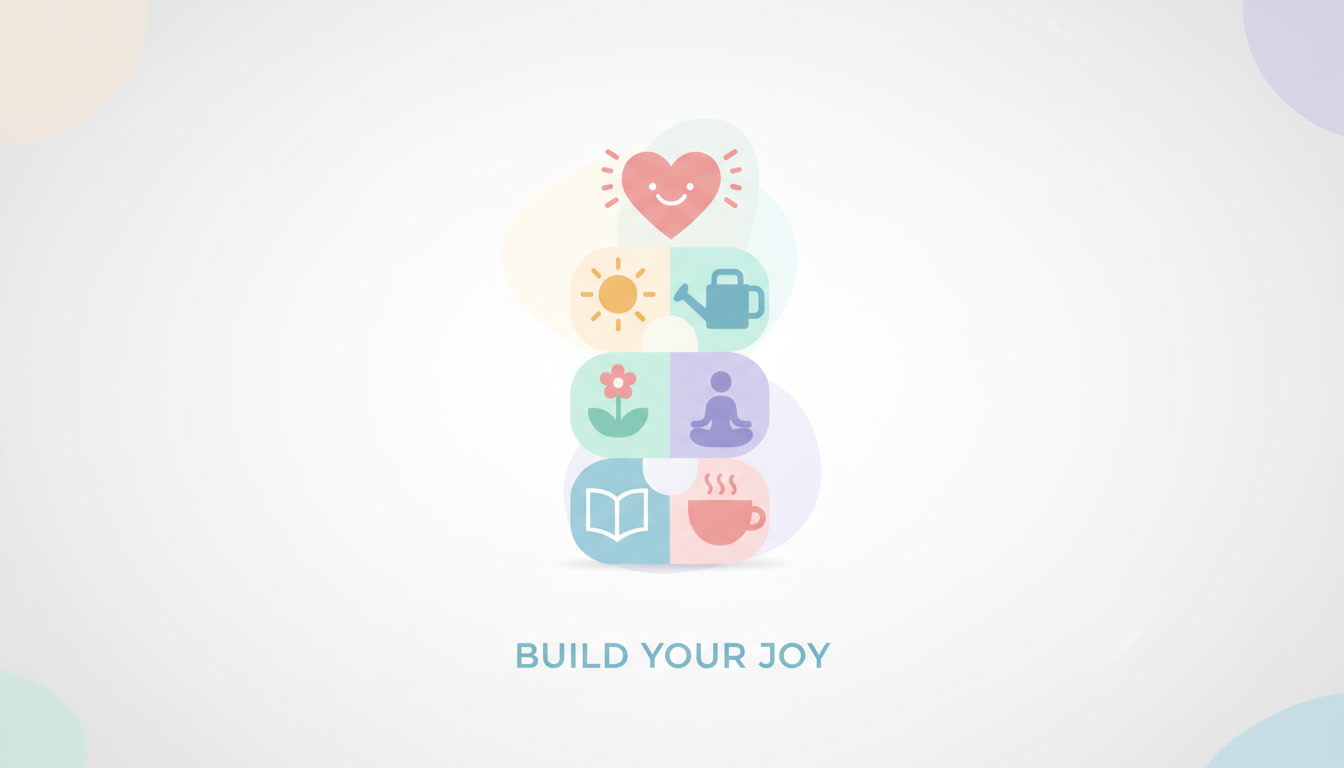
One of the biggest reasons people struggle to build new habits is simple:
they try to add them in isolation.
In Habit Hacks for Happiness, Tess Alder explains that habits stick best when they’re attached to something you already do automatically. This strategy—known as habit stacking—uses your existing routines as anchors for new, positive behaviours.
Instead of relying on motivation, habit stacking lets consistency do the work for you.
What Is Habit Stacking?
Habit stacking is the practice of linking a new habit to an existing one.
The formula is simple:
After I [current habit], I will [new habit].
Because your brain already recognizes the first habit, the second one feels natural and effortless.
This method dramatically reduces resistance, forgetfulness, and decision fatigue.
Why Habit Stacking Works So Well
Habit stacking works because it aligns with how your brain already operates.
1. Your Brain Loves Patterns
Your brain is constantly looking for predictable sequences. Habit stacking fits neatly into this preference.
2. It Removes the Need for Motivation
You don’t have to remember to do the habit—it happens automatically after the cue.
3. It Reduces Cognitive Load
Fewer decisions mean less mental fatigue and greater follow-through.
4. It Builds Identity Faster
Stacked habits become part of who you are, not something extra you try to remember.
Examples of Habit Stacking for Daily Happiness
Here are practical habit stacks inspired by the principles in Habit Hacks for Happiness.
Morning Habit Stacks
- After I brush my teeth → I take three deep breaths
- After I pour my morning drink → I write one gratitude sentence
- After I make my bed → I stretch for 30 seconds
Workday Habit Stacks
- After I open my laptop → I pause and set one intention
- After I finish a task → I stand up and move for 20 seconds
- After I check my email → I drink a glass of water
Evening Habit Stacks
- After dinner → I take a short walk
- After changing into pyjamas → I write one reflection sentence
- After turning off screens → I do a calming breath reset
These small stacks build emotional balance without adding pressure.
How Habit Stacking Improves Happiness
Happiness grows when habits support your nervous system, clarity, and sense of control.
Habit stacking helps by:
- Creating emotional regulation moments
- Increasing awareness throughout the day
- Building consistency without effort
- Reinforcing self-trust
- Preventing burnout
Instead of overwhelming yourself with new routines, you gently layer wellbeing into your existing life.
How to Create Your Own Habit Stack
Use this simple 3-step process:
Step 1 — Identify an Automatic Habit
Choose something you already do daily without thinking:
- Brushing teeth
- Making coffee
- Locking the door
- Sitting at your desk
Step 2 — Choose a Tiny New Habit
Keep it extremely small:
- One breath
- One sentence
- One stretch
- One intention
Step 3 — Keep the Order Fixed
Always perform the new habit immediately after the existing one.
Consistency matters more than intensity.
Common Habit Stacking Mistakes to Avoid
- Stacking too many habits at once
- Making the new habit too big
- Stacking onto an inconsistent routine
- Expecting instant results
Start with one stack, master it, then build from there.
The Happiness Stack Rule
If a habit makes you feel calmer, clearer, or more connected—even slightly—it’s working.
Happiness doesn’t require dramatic change.
It grows from small moments repeated daily.
Habit stacking turns those moments into a system.
Final Thoughts: Build Happiness Into What You Already Do
You don’t need more time or more motivation to feel happier.
You just need smarter systems.
By stacking positive habits onto existing routines, you transform ordinary moments into powerful anchors for wellbeing.
Start with one stack today.
Let happiness build itself—one habit at a time.
