If habits were built on willpower alone, everyone would already have the life they want.
But as Habit Hacks for Happiness makes clear, willpower is unreliable—design is not.
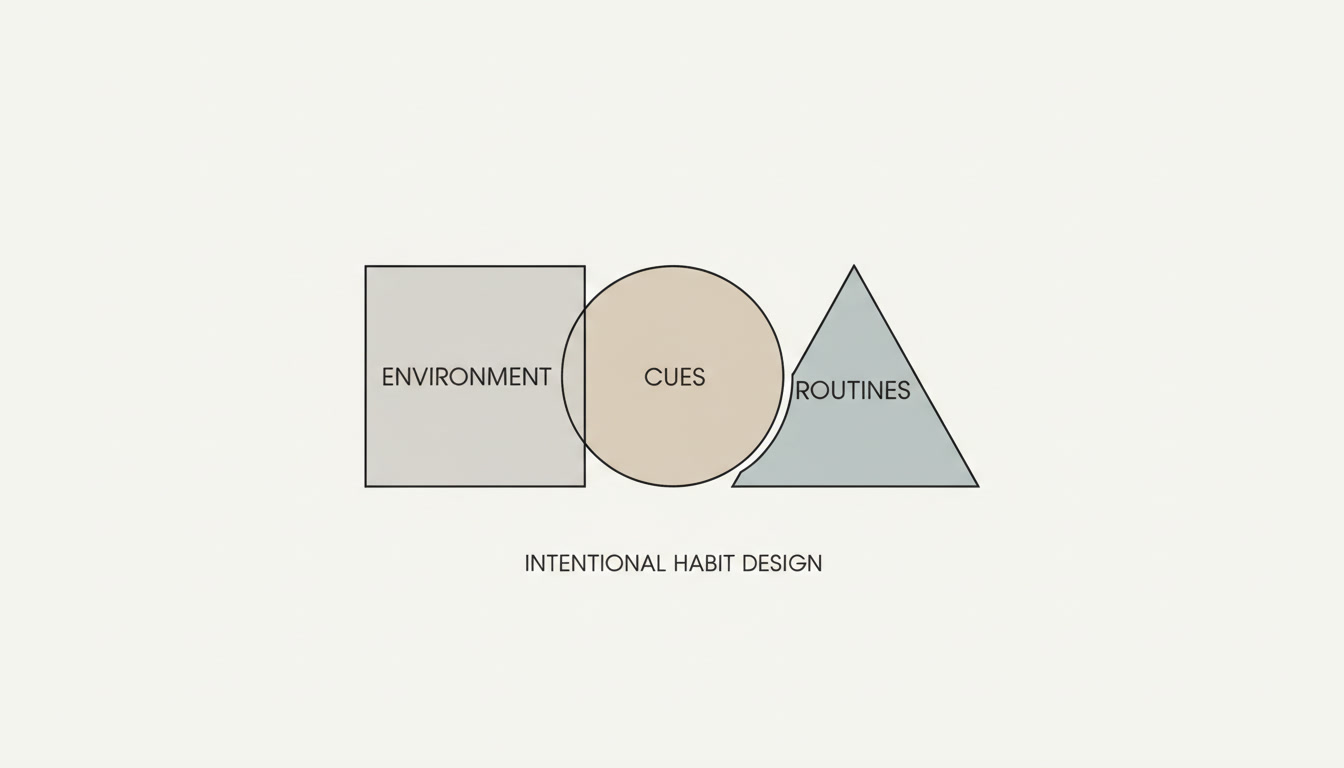
The Behavior Design Method focuses on shaping your environment, cues, and routines so good habits become the default, not a struggle. When habits fit your life naturally, consistency becomes effortless.
This article shows you how to engineer habits that actually work in the real world.
Why Willpower Fails (and Design Succeeds)
Willpower is:
- Finite
- Emotion-dependent
- Easily depleted by stress and decision fatigue
Design, on the other hand:
- Reduces effort
- Creates predictability
- Supports your nervous system
- Makes good choices automatic
Instead of asking, “How can I try harder?”
Ask, “How can I make this easier?”
The Core Principle of Behavior Design
You don’t rise to your goals—you fall to your systems.
Every habit succeeds or fails based on:
- Cues
- Friction
- Environment
- Emotional state
Behavior design focuses on adjusting those elements instead of blaming yourself.
The 4 Pillars of the Behavior Design Method
1. Reduce Friction for Good Habits
Make the habit easier to start than to avoid.
Examples:
- Lay out workout clothes the night before
- Keep a journal open on your desk
- Place water within arm’s reach
2. Increase Friction for Unhelpful Habits
Add small obstacles to habits you want to reduce.
Examples:
- Log out of social media
- Store snacks out of sight
- Charge your phone outside the bedroom
Small barriers create pause—and pause creates choice.
3. Design Clear Cues
A habit without a cue is easy to forget.
Examples:
- Time-based cues (“after lunch”)
- Location-based cues (“when I sit at my desk”)
- Emotional cues (“when I feel stressed”)
Clarity beats intention every time.
4. Celebrate Tiny Successes
Your brain repeats what it’s rewarded for.
A smile, a checkmark, or a mental “well done” reinforces the habit loop.
How Behavior Design Improves Happiness
When habits fit your life:
- Stress decreases
- Self-criticism fades
- Follow-through increases
- Emotional regulation improves
You stop fighting yourself and start supporting yourself.
That shift alone boosts happiness.
Behavior Design in Action (Real Examples)
Goal: Meditate Consistently
- Old approach: “I should meditate every morning.”
- Designed habit: Cushion next to bed + 2-minute timer + cue after brushing teeth.
Goal: Reduce Evening Screen Time
- Old approach: “I need more discipline.”
- Designed habit: Phone charger outside bedroom + book on pillow.
Goal: Journal Daily
- Old approach: “I’ll write when I feel inspired.”
- Designed habit: Journal left open with pen on desk.
Design removes decision-making.
The Behavior Design Reset Question
Ask yourself:
“What is one small change I can make to my environment that makes this habit easier?”
This question turns struggle into strategy.
Final Thoughts: Design Your Life for Success
You are not broken.
Your habits are not weak.
Your environment just needs adjustment.
When you design habits that fit your life, consistency becomes natural—and happiness becomes sustainable.
Start small.
Design wisely.
Let your habits do the heavy lifting.