
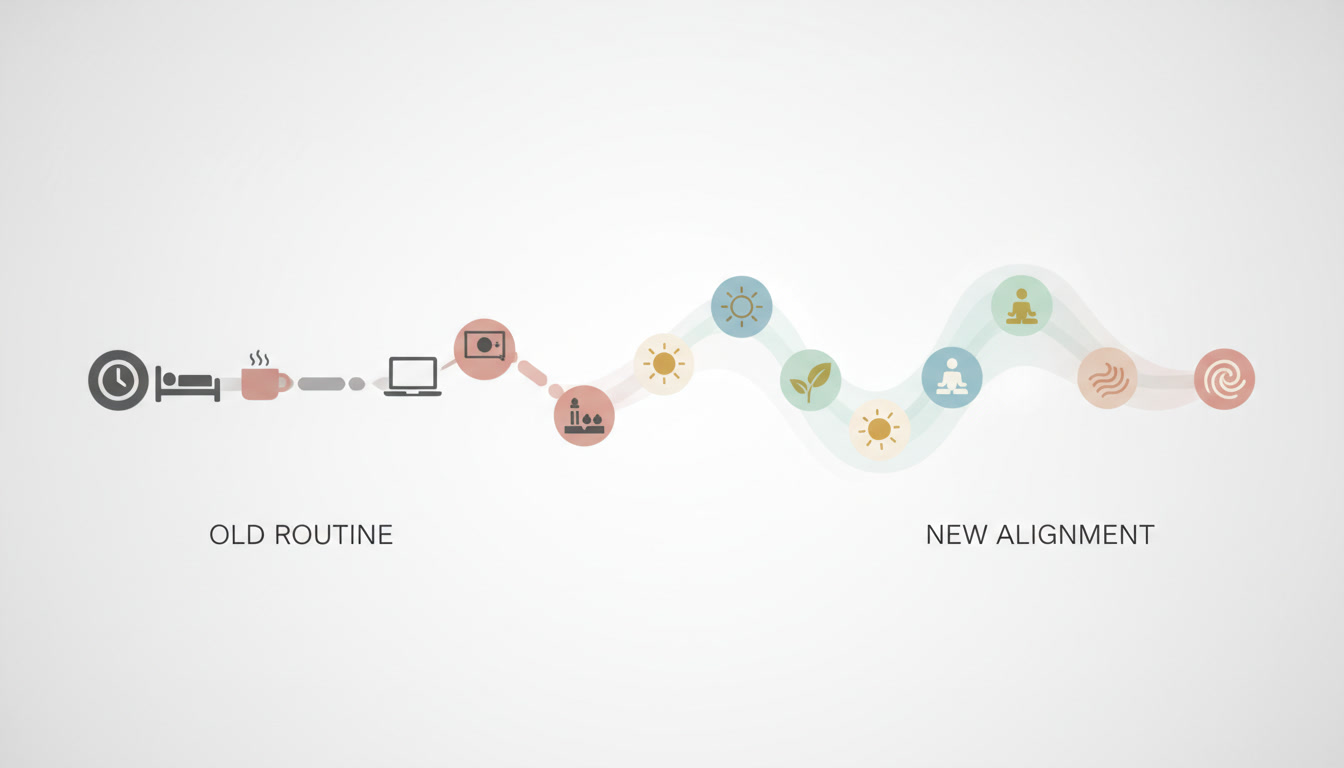
Even the best habits can go stale.
What once felt supportive can start to feel heavy, boring, or draining. That doesn’t mean you’ve failed—it means your routine needs a reset.
In Habit Hacks for Happiness, Tess Alder reminds us that habits should evolve as we do. When your life changes, your routines must change too. A routine reset helps you realign your habits with your current energy, goals, and emotional needs.
This article shows you how to refresh your daily habits without starting from scratch.
How to Know You Need a Routine Reset
You might need a reset if you notice:
- You’re going through the motions on autopilot
- Habits feel like obligations instead of support
- Motivation has quietly disappeared
- You feel stuck, restless, or uninspired
- Your routines no longer fit your lifestyle
A routine reset isn’t about doing more.
It’s about doing what still makes sense—intentionally.
Why Routines Lose Their Power
Routines stop working when:
- They no longer match your values
- They’re too rigid
- They ignore emotional or energy shifts
- They were built for an old version of you
Your nervous system craves alignment.
When routines feel misaligned, resistance increases.
A reset restores harmony between what you do and how you feel.
The 5-Step Routine Reset Process
Use this simple, psychology-backed framework to refresh your habits.
Step 1 — Audit Without Judgment
List your current daily habits and routines.
Ask:
- Which habits energize me?
- Which habits drain me?
- Which habits feel neutral or unnecessary?
Awareness is the foundation of change.
Step 2 — Remove One Draining Habit
You don’t need to add anything yet.
Start by removing or pausing one habit that no longer serves you:
- A rigid morning rule
- An unrealistic productivity expectation
- An energy-draining commitment
Subtraction often creates more relief than addition.
Step 3 — Renew One Supportive Habit
Choose one habit that still feels good—but needs refreshing.
Examples:
- Shorten it
- Change the time of day
- Make it more flexible
- Reduce expectations
This keeps continuity without burnout.
Step 4 — Add One Energizing Micro-Habit
Introduce one small habit that boosts energy or joy:
- One minute of stretching
- A short walk
- A daily intention
- A joy check-in
Keep it light. Keep it easy.
Step 5 — Re-Evaluate Weekly
Once a week, ask:
“Does this routine still support me?”
This prevents stagnation and keeps your habits aligned with real life.
Routine Reset Examples
Morning Reset
- Old: 60-minute rigid routine
- New: 10-minute flexible foundation
Workday Reset
- Old: No breaks until exhaustion
- New: Short reset breaks every 90 minutes
Evening Reset
- Old: Scrolling until sleep
- New: One calming anchor habit before bed
Small changes create big relief.
Why Routine Resets Improve Happiness
Routine resets:
- Reduce pressure
- Restore autonomy
- Increase emotional alignment
- Prevent burnout
- Reignite motivation
When habits support your energy instead of draining it, happiness becomes sustainable again.
The “Good Enough” Rule
Your routine does not need to be perfect.
A “good enough” routine:
- Supports your wellbeing
- Adapts to your life
- Leaves room for rest and joy
Perfection kills consistency.
Flexibility protects it.
Final Thoughts: Your Routines Should Grow With You
Feeling stuck doesn’t mean you need a new life.
It means your habits need an update.
A routine reset gives you permission to evolve—without guilt or pressure.
Let your habits serve who you are now.
That’s how momentum—and happiness—return.
