
“I am not creative” is one of the most common and most damaging things a person can tell themselves. It treats creativity as a fixed trait rather than a capacity that can be cultivated and deepened at any age and from any starting point.
Why Creative Practice Matters
Research in positive psychology makes a compelling case for creativity as a psychological need. Creative engagement activates the default mode network in ways that other activities do not, producing a state sometimes called flow — absorbed, timeless engagement where self-consciousness temporarily disappears. This state is strongly associated with wellbeing and peak experience. Regular creative practice also tends to improve problem-solving in other domains and build what psychologists call psychological flexibility.
Creative Habits That Do Not Require Talent
Morning pages. Three pages of longhand writing first thing each morning, without censorship or goal. Not about the quality of writing — about the daily practice of externalising the interior. Most people who sustain this for a month report a noticeable shift in how their mind works throughout the rest of the day.
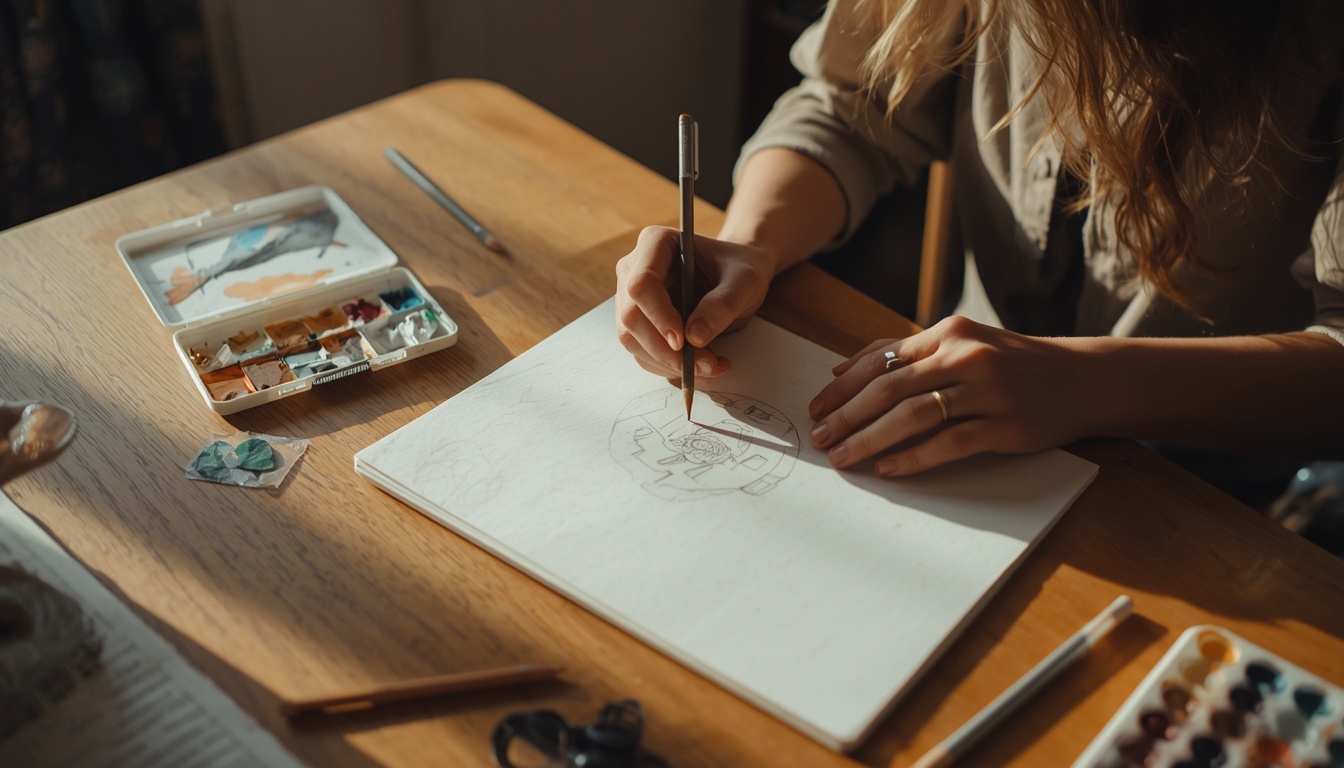
Doodling with no output pressure. A notebook kept purely for doodling, with no aspiration beyond filling pages with marks, tends to be more enjoyable and more creatively generative than working toward a “good” result.
Photography as observation practice. Taking one photograph a day trains the visual perception that underlies most creative seeing. You are practising the habit of looking carefully at the world.
Making something weekly. A meal cooked with genuine attention, a card made by hand, a playlist assembled with care. The act of making is the point.
The solitude and reflection that support creative habits are explored in solitude as a habit. And journaling for habit success often serves as the gateway to wider creative practice.
Inside Habit Hacks for Happiness, creative expression is treated as a happiness habit in its own right — not a luxury for artists, but a fundamental practice for any person trying to build a life with genuine depth and satisfaction.
